Some questions to consider

We all strive to live a healthy and happy life, but what exactly does being “healthy” mean? Is it solely based on physical wellbeing or does it encompass mental, emotional, and social aspects as well?
We are constantly bombarded with conflicting information and images of what a healthy lifestyle should look like. But the truth is, there is no one-size-fits-all answer.
Healthy means something different to each and every one of us.
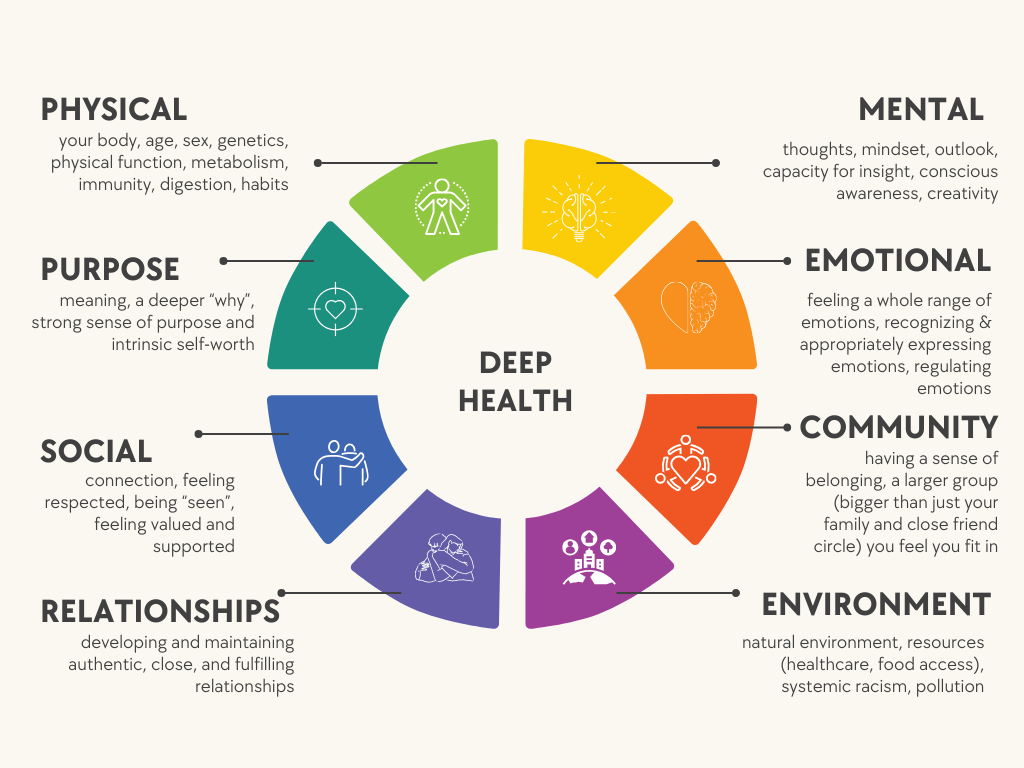
If you look at the graph above, our health is not just our physical being, but also our mental health, our emotions, our sense of purpose, our relationships, support and community, as well as the greater environment around us.
What does healthy mean to you?
Is it simply the absence of illness and disease? Or does it encompass overall wellbeing and optimal functioning in daily life?
Here’s some questions to consider:
- How would you rate your current level of physical fitness, and what steps are you taking to improve it?
- Are you getting enough sleep each night, and if not, what obstacles prevent you from doing so?
- What is your typical diet like, and do you feel it adequately nourishes your body?
- How often do you engage in physical activity, and what types of exercise do you enjoy?
- Are there any chronic health conditions or concerns you’re currently managing, and if so, how do they impact your daily life?
- Is stress affecting your overall health and functioning? Do you practice stress management techniques, and if not, what strategies could you implement to better cope with stress? Do you feel like you have effective coping mechanisms for managing stress, anxiety, and other negative emotions?
- How do you prioritize preventive healthcare, such as regular check-ups and screenings?
- Do you have any habits or behaviors that may be detrimental to your physical health, such as smoking or excessive alcohol consumption?
- How do you incorporate relaxation and leisure activities into your routine to promote physical wellbeing?
- How would you describe your overall mood and emotional wellbeing on a typical day? Are you able to recognize and address your emotional needs in a healthy way?
- How do you prioritize self-care activities that support your mental and emotional wellbeing?
- Do you have a support system in place that you can turn to during times of difficulty or distress?
- Are you able to set boundaries with others to protect your mental and emotional health? Are you able to set boundaries in your relationships to protect your own needs and wellbeing?
- How do you cultivate a sense of purpose and meaning in your life? What activities or pursuits bring you a deep sense of fulfillment and meaning in life?
- Do you engage in activities that bring you joy and fulfillment on a regular basis?
- Are there any past traumas or unresolved issues that continue to affect your mental and emotional health?
- How do you practice mindfulness and stay present in the moment?
- Are you able to maintain a healthy (for you) work-life balance, or do you often feel overwhelmed by obligations?
- What strategies do you use to manage negative thought patterns and cultivate a positive mindset?
- Are you able to forgive yourself and others for past mistakes and move forward with a sense of compassion?
- How do you nurture your relationships and cultivate a sense of connection with others?
- Have you identified your core values, and how do they guide your decisions and actions? Do you feel like you’re living in alignment with your passions and interests, or do you aspire to make changes in this area?
- Have you reflected on what legacy you want to leave behind, and how does this influence your daily choices and long-term goals?
- How do you find meaning in both the ordinary moments and significant milestones of your life?
- How do you prioritize spending time with loved ones and nurturing your relationships?
- Are you able to communicate openly and honestly with the important people in your life?
- Do you feel a sense of belonging and connection within your social circles and communities?
- Are there any toxic or unhealthy relationships in your life that may be negatively impacting your wellbeing?
- Do you have a support network of friends and family whom you can rely on during challenging times? Have you cultivated meaningful connections with others who share your interests and values?
- How do you navigate conflicts and disagreements within your relationships in a constructive manner (and do you)?
- Are you able to maintain a healthy balance between socializing and alone time to recharge? How do you prioritize quality time with loved ones amidst the busyness of daily life?
- How connected do you feel to your local community, and what efforts do you make to contribute positively to it?
- Are there any social or cultural barriers in your community that hinder access to resources or opportunities for certain groups of people?
- How does your community support access to healthcare services, healthy food options, and other essential resources? How does your community address issues related to food security and access to nutritious foods for all residents?
- Have you noticed any environmental factors in your community, such as pollution or lack of green spaces, that may impact your physical health?
- Are there organizations or initiatives in your community working to address environmental justice issues and promote sustainability?
- How do systemic inequalities, such as racism or socioeconomic disparities, affect health outcomes within your community? Are there efforts in your community to address these inequalities and promote health equity for all residents?
- How does your community support mental health and wellbeing, including access to counseling services and support groups? Are there opportunities for civic engagement and advocacy within your community to address health-related concerns?
- Have you observed any instances of environmental degradation or exploitation in your community, and how do these impact residents’ health and wellbeing?
You can use the above questions to assess your definition of health, but also to consider aspects affecting your health you may not have thought about before.
Use your journal, write about the various aspects of health and which ones are important or impactful for you. Evaluate areas that you’d like to prioritize.
The concept of healthy is a subjective one, and it means different things to different people.
It’s important for us to take some time to reflect on our own definitions of health and what it truly means to us. Thus, we can gain a deeper understanding of our personal definition of healthy, and consider how we can incorporate small changes into our daily routine to achieve a healthier self.
Remember that health is not about perfection, but rather progress and finding a balance that works for you.
So whether it’s eating nourishing foods, staying active, taking care of your mental health or practicing self-care, always prioritize your wellbeing and define healthy in a way that makes you feel happy and fulfilled.
If you’ve found this helpful, I’d love for you to subscribe to my Health Tips Newsletter to get implementable health tips on movement, stress reduction, mindset, and so much more. Sign up here.
If you’d like support in implementing any of these health practices, I’d love to be your coach. Schedule a discovery call so we can check if we’re a good fit.



 Train&Rest Coaching
Leave a comment