How much time do you spend worrying about your body’s appearance or weight?
If you’re like many women it’s probably a lot. I’d like to suggest a change in the way you think about your body.
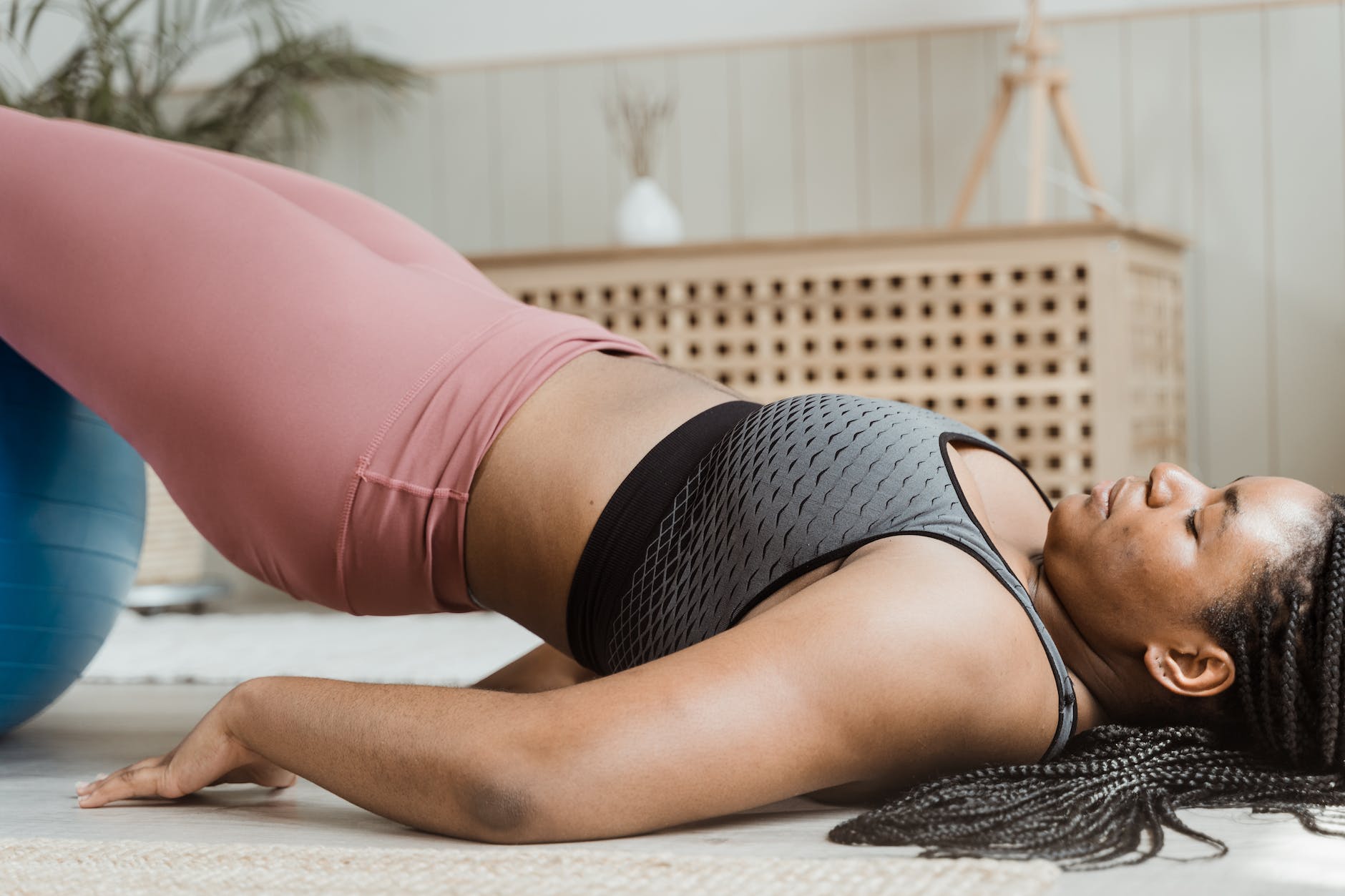
Our bodies are tools for living. How our body looks has nothing to do with our worth or whether we’re a good person. It’s actually the least interesting thing about us.
Even if we devote hours each week to work out and eat the healthiest food, it doesn’t make us better or worse than others. In the same way, if you don’t exercise and eat fast food it doesn’t make you worse or better than others.
That’s just the way it is, and I’d like to suggest that we take a break from judgmental thoughts related to our bodies, movement, food, etc. There’s no such thing as bad or good forms of exercise. There’s no such thing as bad or good forms of food. There are some that I like or prefer.
What would it be like to think of the body not as who we are or as some indicator of our worth or our identity… but simply as a tool for living? A vessel for our experiences?
It may alleviate our preoccupation with how we look, but it may also inspire us to take care of that vessel to make it stronger and healthier—enough so that we can enjoy the journey of life instead of worrying about a broken vessel.
So I encourage you to take care of your body not because it’ll look good—although that may be the result—but more for the following reasons.
Stress reduction
Many studies indicate that physical activity reduces cortisol—the stress hormone— levels in the body. In addition, the more someone does physical activity, the less stress they feel. And interestingly, the more stress we have, the more likely we are to reduce our physical activity, exacerbating our feelings of stress and all its effects.
The best effects come from those types of movement that fall into the low- to medium-intensity groups, such as yoga, walking, or light jogging, although there are also studies that indicate that intensity doesn’t matter. What matters most is the amount of time spent exercising while decreasing time spent sitting.
Feeling stressed is strongly linked to the risk of many physical and psychological diseases. It appears that even an hour’s walk can help us lower it.
Increased sense of agency
I’ve noticed a relationship that, in addition to feeling stronger and fitter, the more I move, the more I feel a sense of agency in other areas of my life. Maybe it’s connected to the fact that I’ve done something physically that until recently remained in the realm of dreams or thinking ‘someday I’ll make it’, and suddenly I’ve done it.
I think: ‘If I succeded in this, what else is possible?‘ I start trying new ideas. I feel I can do more in many other areas of my life. I also have more ideas in general.
And this leads to…
Improved self-confidence
Suddenly I see what I’m capable of. I feel physically stronger, fitter, and more flexible, and I start to feel the same way psychologically. It’s not so much about the physical appearance but more about what the body can do, though not entirely, either.
During physical activity I continuously test my limits and try to push them. The more I feel I accomplish, the more confident I feel not only in my body but also in my life.
It’s not just about achieving something impossible either. Sometimes it’s just being more aware of my body while moving, or doing one more pushup.
More agility and better mobility
The American College of Sports Medicine recommends that most adults engage in moderate-intensity physical activity for at least 30 minutes a day at least 5 days a week (totaling ≥150 minutes a week), high-intensity exercise for at least 20 minutes a day at least 3 days a week (≥75 minutes a week), or a combination of moderate- and high-intensity exercise. On 2-3 days a week, adults should also perform resistance training for each major muscle group, as well as neuromotor exercises involving balance, agility and coordination.
Regular physical activity increases not only strength and endurance, but also agility and mobility, which helps reduce pain as well as the risk of injury. The body also remains physically fit longer.
A sedentary lifestyle fosters rigidity and fatigue, making it increasingly difficult to move and start being active.
Greater body awareness and a better relationship with your body
In recent years I’ve had the goal of doing an unassisted pull up. My starting point was zero—I couldn’t do a pull up at all, with or without help. So in the beginning, I worked to increase my body awareness to understand which muscles I should activate to perform this rather complex movement. I did isolation exercises, such as focusing on shoulder protractions while hanging on the bar.
Now I’m at a different point of achieving this goal. With the help of resistance bands, I’m able to perform dozens of pull ups. I also now understand the importance of the abdominal muscles as well as which shoulder and back muscles I need.
Thanks to this, I am now more aware of my back, which didn’t exist in my awareness much before.
This has also helped to better my relationship with my body. To perform such a complex movement requiring strength, my body needs to be properly nourished and cared for, and best of all, this has nothing to do with how much I weigh or what my body looks like.
TIPS:
- Choose a physical activity you enjoy. It’s easier to do be consistent with something you enjoy.
- Find a partner to move with. Doing something we enjoy with someone we like not only makes the physical activity more enjoyable, but also deepens our friendship or family connection. (My husband and I go hiking regularly and do kettlebell training twice a week, and this has done wonders for our relationship.)
- Move regularly. The more often you move, the more benefits you reap.
- Don’t judge the movement. Movement is movement. There is no better or worse. A worse kind of movement is one you don’t do.
- Make sure to get a variety of movement. That way you won’t get bored with one type of physical activity. (My week consists of strength training, yoga, power walking, hiking, kettlebell training, bicycling, and sometimes dance.)
- The intensity of the movement doesn’t mean it’s better at all. I know that some people don’t feel good until they’re dripping with sweat. Intense workouts have their place, however, it’s a good idea to limit them to 2-3 times a week. Moderate intensity physical activity can be done daily, which in my experience makes it easier to be consistent.
What are your reasons to move your body?
Subscribe to my Health Bites Newsletter to get condensed updates on the sleep challenge along with implementable health tips on movement, stress reduction, mindset, and much more.


 Train&Rest Coaching
Leave a reply to The Power of Simplicity – Train&Rest Coaching Cancel reply